Electric estate cars used to be an uncommon choice. Now there are several models advertising more than 300 miles of official range, with the practicality of a traditional estate rather than an SUV. But do those figures mean you can drive 300 miles in ordinary UK conditions without stopping?
Not necessarily. The numbers below are manufacturer-published WLTP figures, not measured owner averages. They are useful for comparing versions tested under a common procedure, but they do not promise 300 miles on a cold motorway journey.
Three electric estates worth comparing
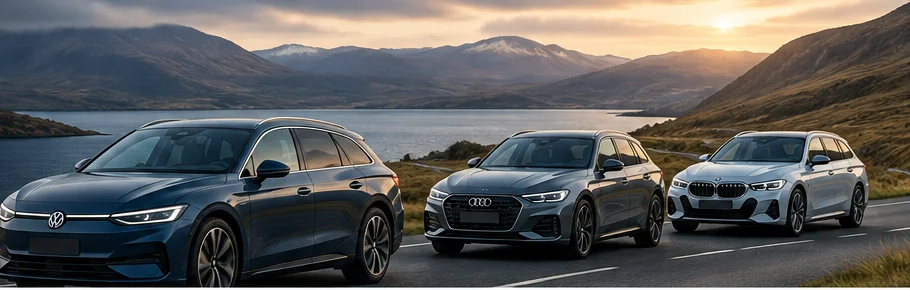
Volkswagen ID.7 Tourer
Volkswagen's UK website lists the ID.7 Tourer range at 357–422 miles combined WLTP, depending on the version and equipment. Its Pro S has a larger usable battery than the Pro, and the GTX's performance-focused specification affects its official range. Even within one nameplate, the precise version matters.
Check Volkswagen's UK ID.7 Tourer specifications.
Audi A6 Avant e-tron
Audi's published UK figures for the A6 Avant Sport e-tron include 354–364 miles WLTP, based on its stated specification. Other A6 Avant variants can differ significantly, so don't assume a figure for one derivative applies to every A6 Avant.
See Audi UK's EV figures and assumptions.
BMW i5 Touring
BMW lists the i5 eDrive40 Touring at approximately 339–365 miles WLTP in its UK technical data, depending on configuration. Its larger body and usable luggage space make it a natural candidate for drivers considering an electric estate, but wheel and trim choices can alter the official figure.
See BMW UK's i5 Touring technical data.
Figures reviewed in October 2026. Specifications and model ranges change, so use the manufacturer's current UK information when making a purchase decision. We are comparing advertised WLTP range here — not declaring a real-world winner.
What does “300 miles of range” actually mean?
There is a crucial difference between 300 miles WLTP and 300 miles on a single real journey. The WLTP cycle includes a mixture of driving conditions. Your own result will depend on speed, temperature, weather, elevation, wheel and tyre choices, heating and how heavily the car is loaded.
For an estate, that last point deserves attention. Its spacious boot is a selling point, but the range available for a fully loaded motorway trip is the number that matters if you routinely carry passengers, luggage or equipment.
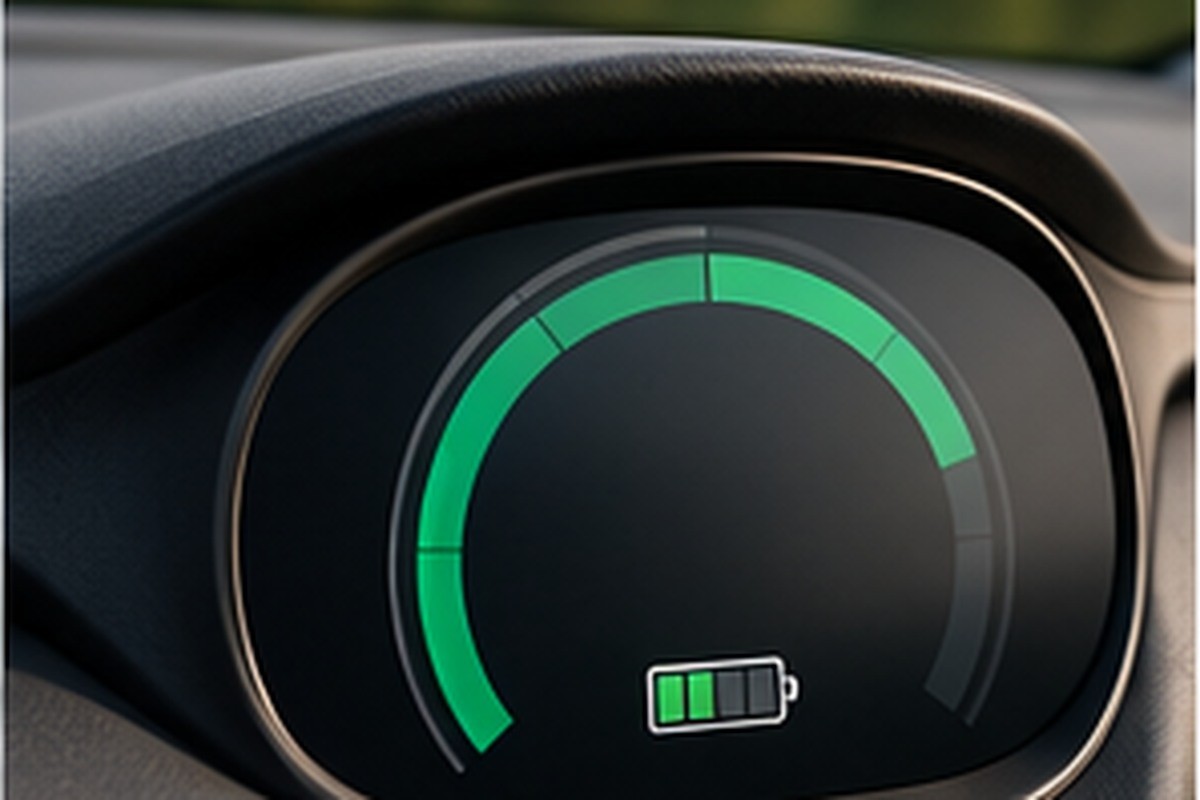
The dashboard's estimated remaining range is also not a laboratory result. It can change after a fast drive, an unusually efficient trip or a change in weather. Learn why EV range predictions change.
Think about the battery percentage you will actually use
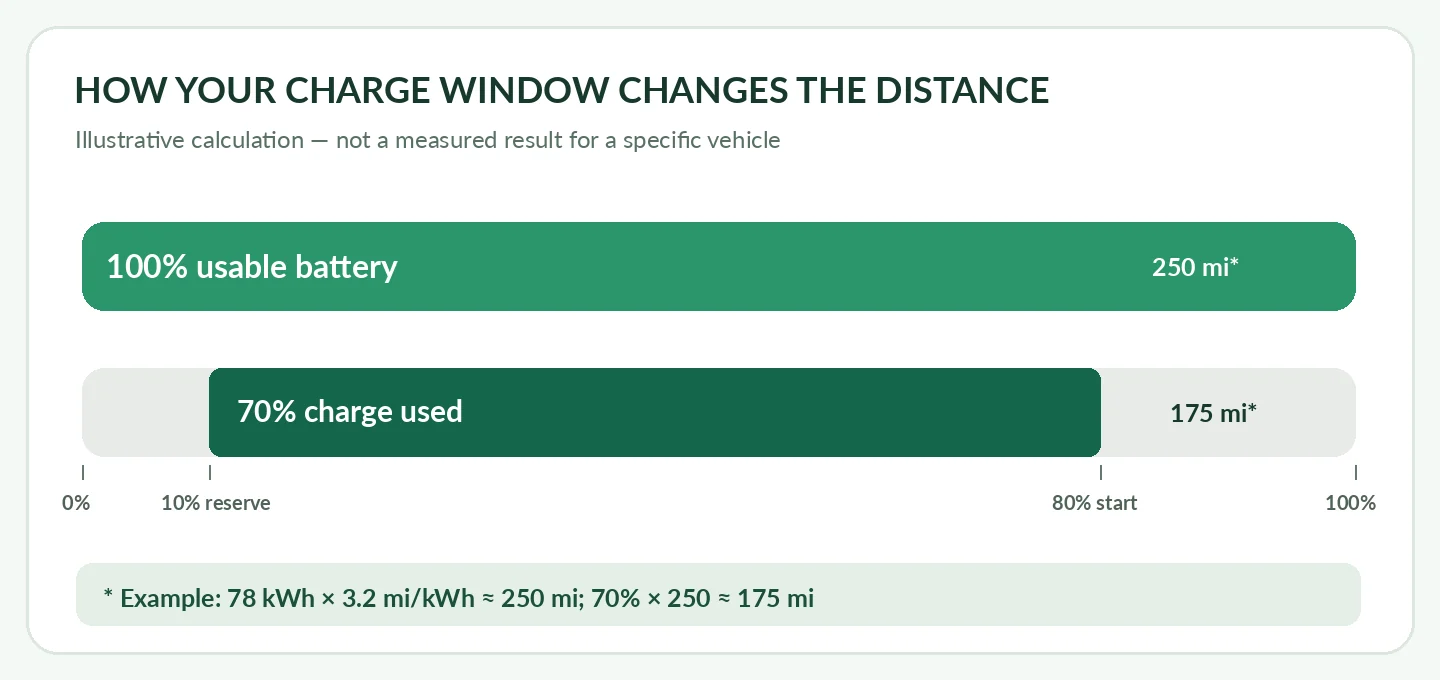
A stated full-battery range assumes a full charge and depletion across the usable battery window. For day-to-day trips, you may prefer to start below 100% and arrive with a reserve.
For illustration only, imagine a car with 78 kWh usable capacity averaging 3.2 miles per kWh in your conditions. A theoretical 100%-to-0% distance would be about 250 miles. If you depart at 80% and aim to arrive at 10%, you have roughly 70% of usable energy — about 175 miles at that same measured efficiency. Charging buffers and displayed state of charge differ by vehicle, so this is a planning example rather than a forecast.
This is why comparing two cars by their biggest WLTP number alone can be misleading.
Check motorway range, not just combined range
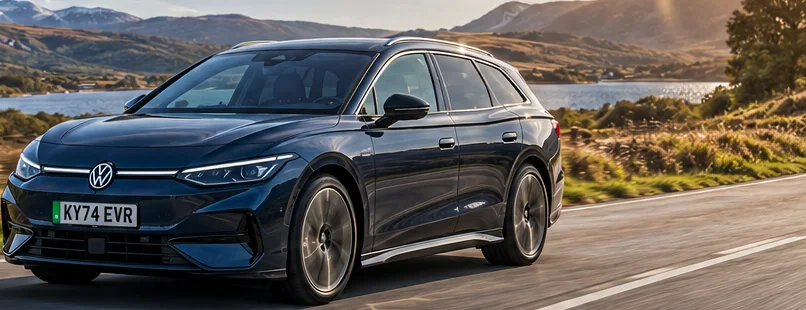
If your regular journey is Exeter to the Midlands or a long cross-country run, steady higher-speed driving could be much less efficient than a mixed-speed test. Look for evidence from owners using the same battery and powertrain, especially in colder weather, rather than relying on a different trim's headline figure.
The charging side matters too. Two estates with similar driving range may differ in rapid-charging speed, charging-curve behaviour, efficiency and the availability of suitable charging stops. The most convenient long-trip EV may not be the one with the longest brochure figure.
Read how 70 mph motorway driving affects EV range.
Our comparison checklist
When shortlisting an electric estate with a 300-mile range claim, check:
- Exact version: battery, powertrain, wheel size and model year — not just the model name.
- Official combined WLTP: a consistent starting point, not a promise.
- Measured owner journeys: how many independent drivers contributed, under what conditions, and whether the sample is mature enough to rank.
- Your usable charge window: starting percentage, desired arrival reserve and access to charging.
- Efficiency in your conditions: particularly winter, wet roads and sustained motorway speeds.
- Rapid-charging experience: how easily a longer trip works if a stop is needed.
Help build a comparison that goes beyond manufacturers' claims
MyEVRange is collecting real journeys from EV owners so we can show what drivers actually achieve, separately from official WLTP numbers and other published estimates. We do not invent owner averages for vehicles that have not received enough reliable evidence.
Browse electric cars on MyEVRange, find your precise battery and variant, and use Add a journey or the supported journey import route. A genuine submission is more useful than another unverified claim of a 300-mile drive.